
In the unpredictable world of wildlife care, challenges are constant. Recently, a dedicated team faced tough conditions while rescuing a young bull elephant caught in a snare in Mount Kenya.
Over four intense days, they battled through swamps, high altitudes, and dense terrain to save the animals.
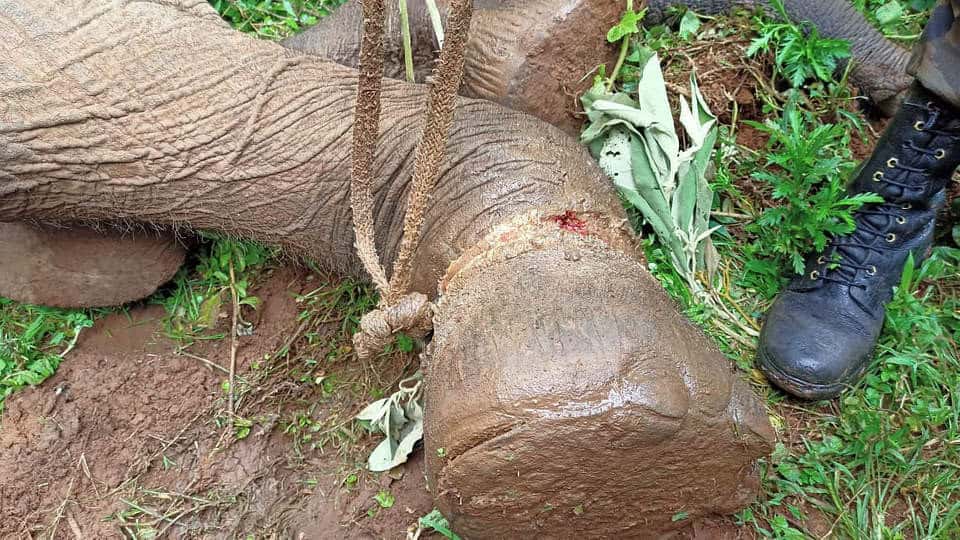
The journey began on January 20th when rangers from the Kenya Wildlife Service (KWS) found the elephant trapped in a thick rope.
Swiftly, the SWT/KWS Mount Kenya Mobile Veterinary Unit launched a rescue mission, tracking the elephant by the evening.
However, the initial attempt was unsuccessful due to the difficult landscape and the elephant’s aggressive behavior.
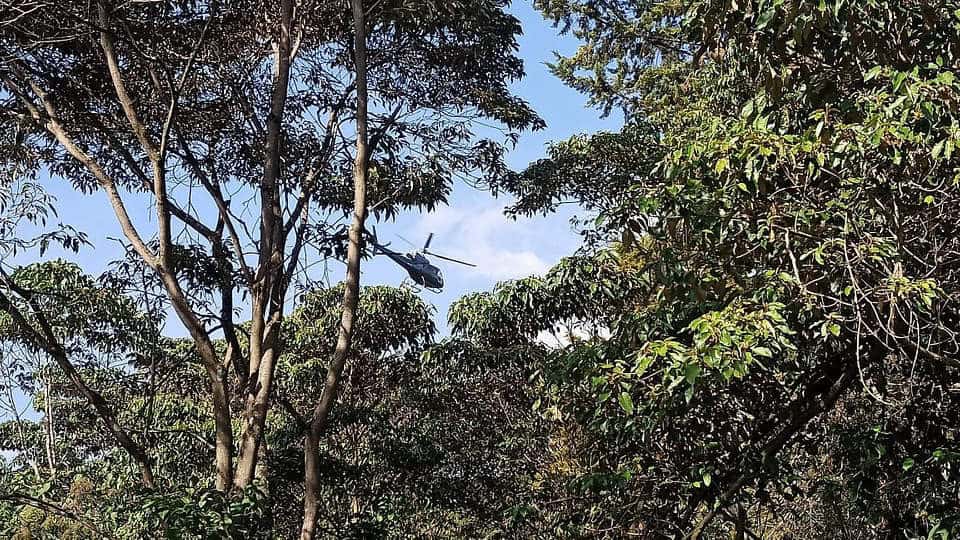
Undeterred, the team called for backup through the Sky Vets initiative the following day. A helicopter was dispatched to navigate the challenging terrain and pick up KWS veterinarian Dr. Njoroge.
The new plan was to tranquilize the elephant from the air. However, dense vegetation and towering trees made it impossible to get close enough.
Despite the pilots’ best efforts, the elephant retreated deeper into the forest, leaving the ground teams struggling to keep pace through thick brush and seasonal rivers. Realizing the toll the snare took on the elephant, the rescuers vowed to try again.
On January 22nd, KWS Mount Kenya Rangers and wildlife and forest scouts resumed their search.
A fixed-wing airplane was dispatched to assist from the air, and while the elephant was located, it remained hidden deep within the forest.
The pilot recorded GPS coordinates to help the ground teams monitor the elephant’s movements, hoping it would eventually reach a more accessible area for treatment.
Finally, on the fourth day, a breakthrough came. The elephant had moved to a watering hole in a more open forest.
The team quickly moved in, but the elephant, in severe pain, became more aggressive and retreated into dense foliage. The team pressed on despite the dangers, braving rivers and swamps to stay on his trail.
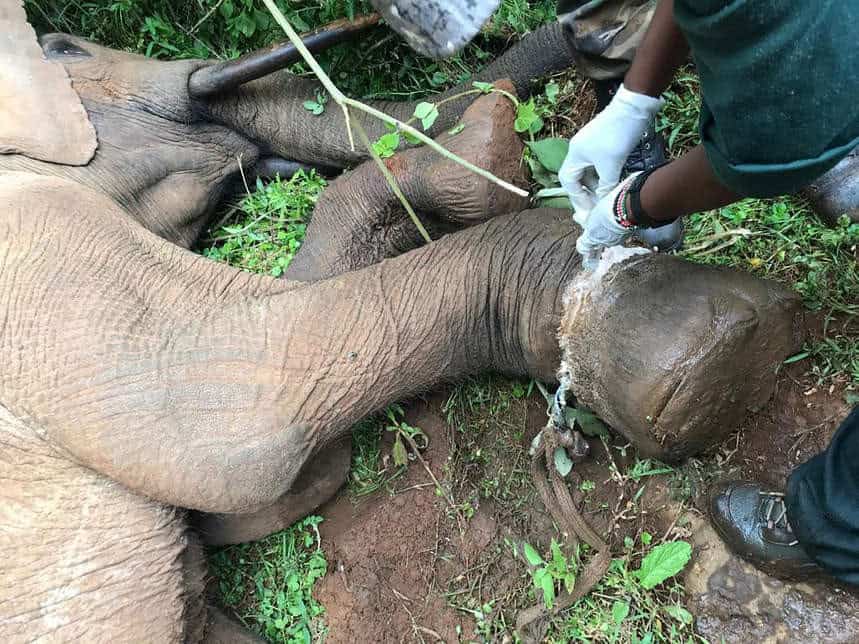
To avoid further risks, they devised a plan to administer anesthesia from the safety of the treetops.
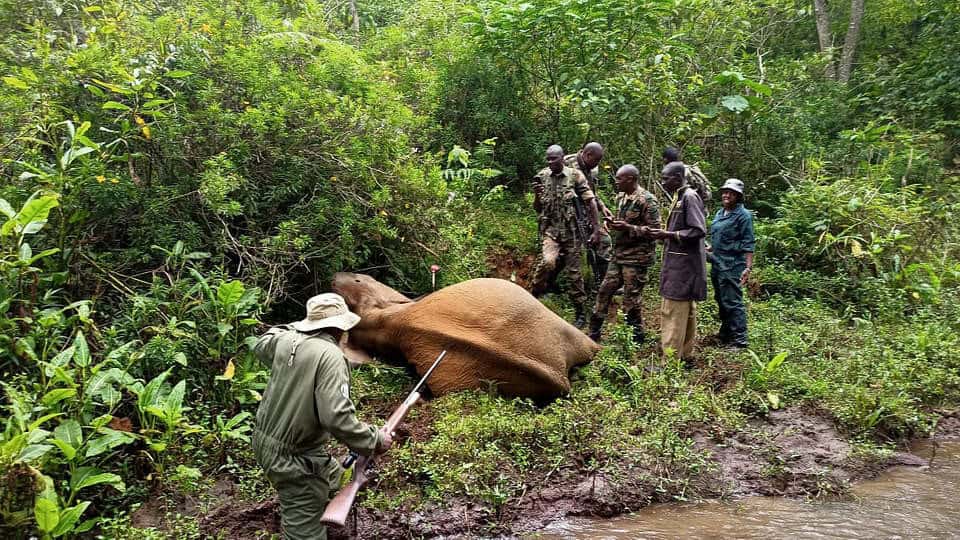
High above the elephant, Dr. Njoroge and a ranger waited patiently. Seizing the right moment, the doctor successfully darted the elephant. As the anesthesia took effect, the team tracked the now-sedated bull lying near a stream.
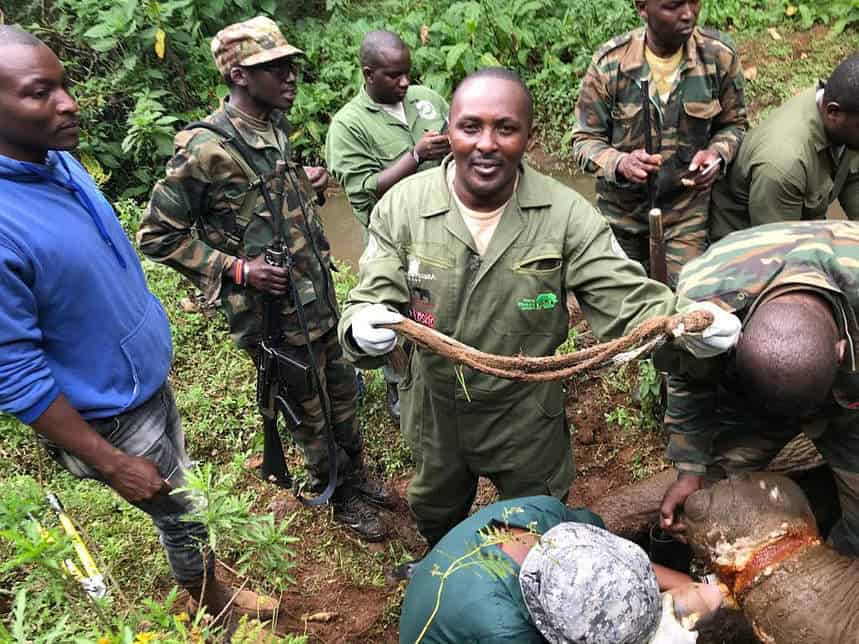
After days of effort, the actual treatment took just 30 minutes. The team carefully removed the snare, which had caused deep wounds, by cutting ten centimeters into the elephant’s leg.
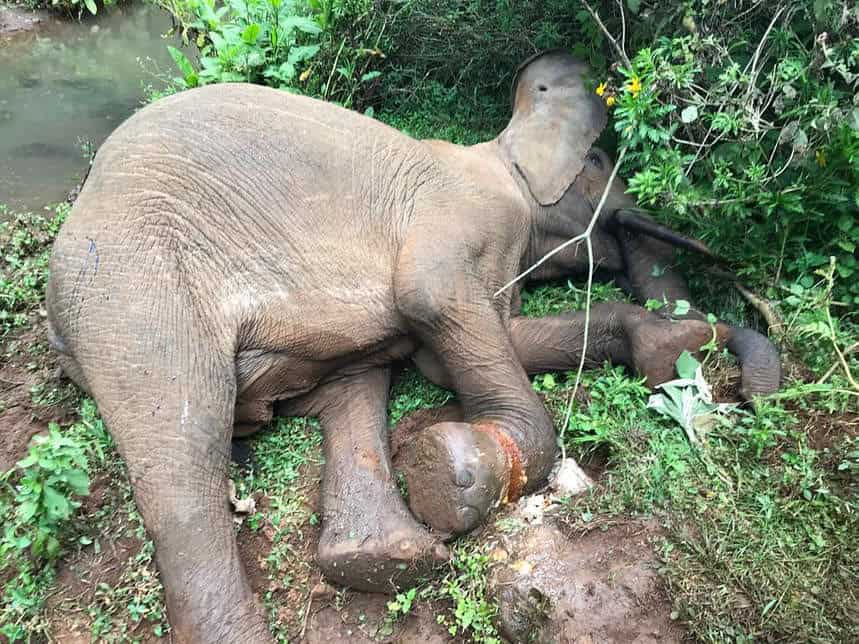
They cleaned the wound, removed dead tissue, and applied antibiotics to promote healing.
Once the anesthesia wore off, the elephant stood up within minutes and quietly disappeared into the bush. Teams will monitor him over the next two weeks to ensure he recovers fully.
At only 15 years old, this young elephant now has a second chance at life, thanks to the unwavering commitment of his rescuers. He can look forward to a healthy future, free from the agony of the snare.
Read more Elephant News.


